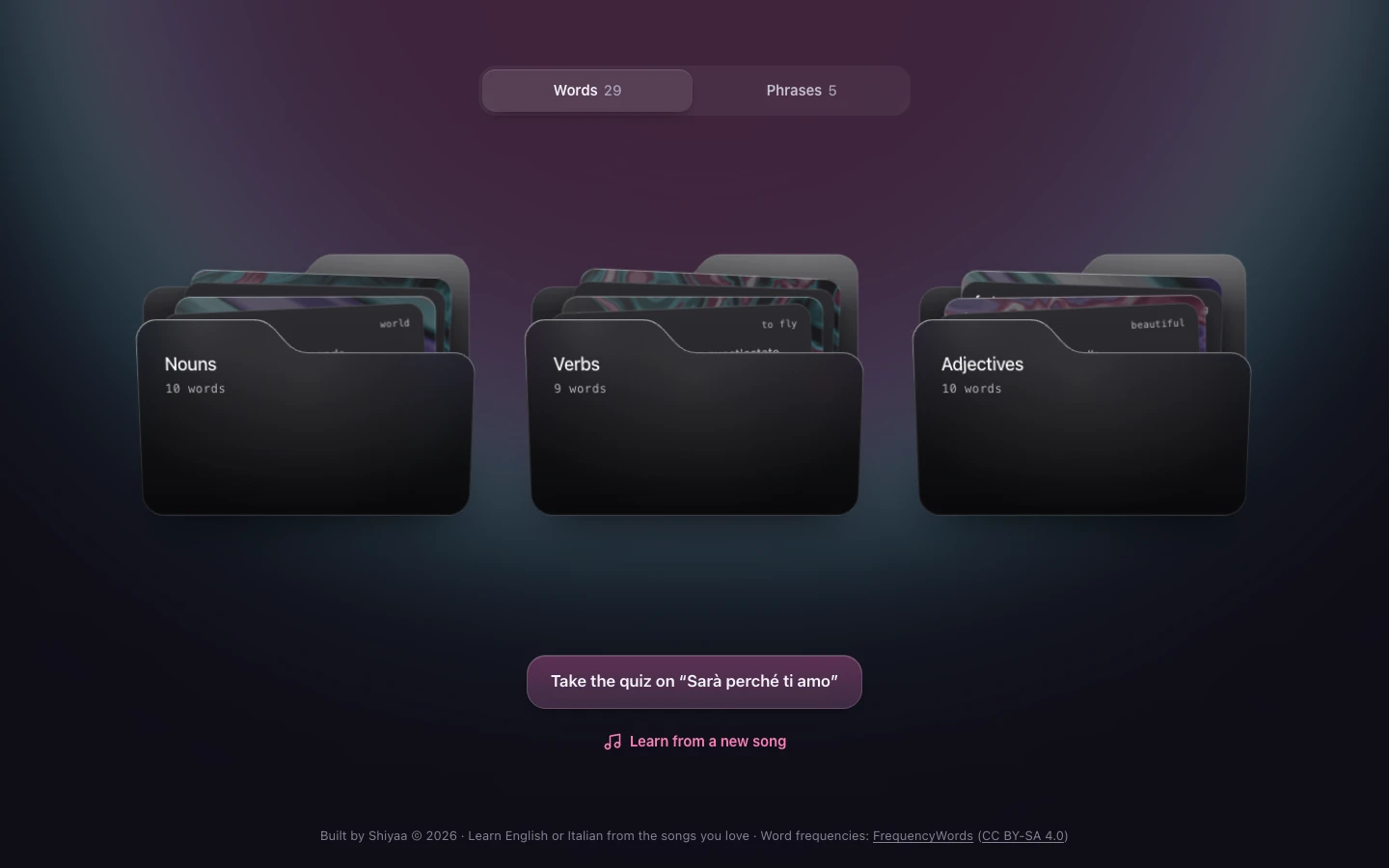
01
Organise
Folders give nouns, verbs, and adjectives a familiar home. Phrases have their own view.
Learn English or Italian through songs you love. I built Ly2Lang solo with Claude Code, then shaped its first interface into a focused place to collect words, explore phrases, and test what I’d learned.
01 / Overview
I love discovering songs in other languages, especially Korean music. While learning Italian, I kept moving between Genius translations, ChatGPT explanations, and separate notes. Each song meant collecting the pieces of a lesson myself. I wanted them together in one place—and thought of my Italian friends learning English, too.
My earlier routine
The idea
A small digital notebook, organised around a song I already wanted to understand.
02 / The experience
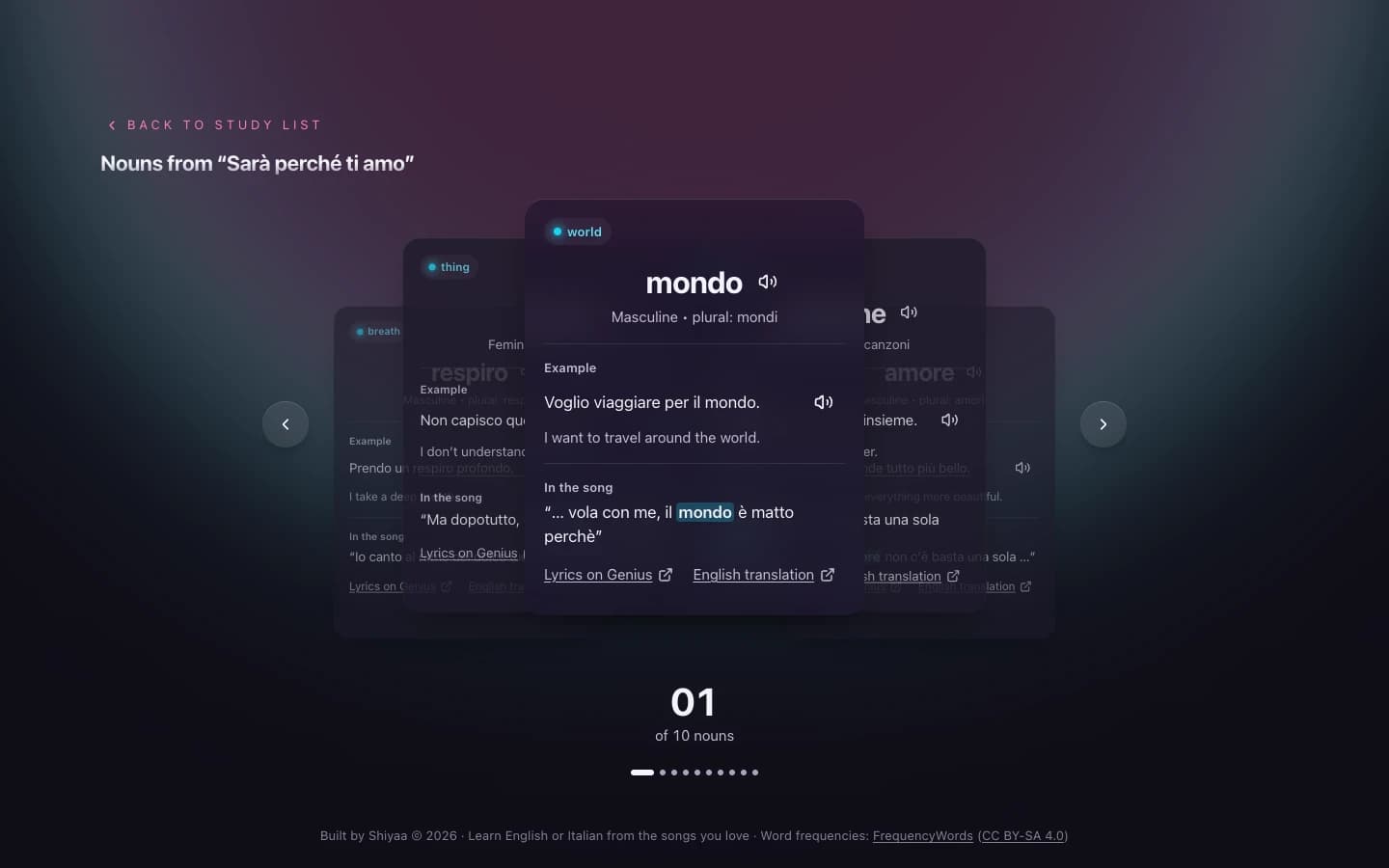
Search by song or artist, paste lyrics, or start with a featured song. Explore words in folders, hear their pronunciation, and connect them to everyday examples. A short quiz draws from the same study list.
01
Folders give nouns, verbs, and adjectives a familiar home. Phrases have their own view.
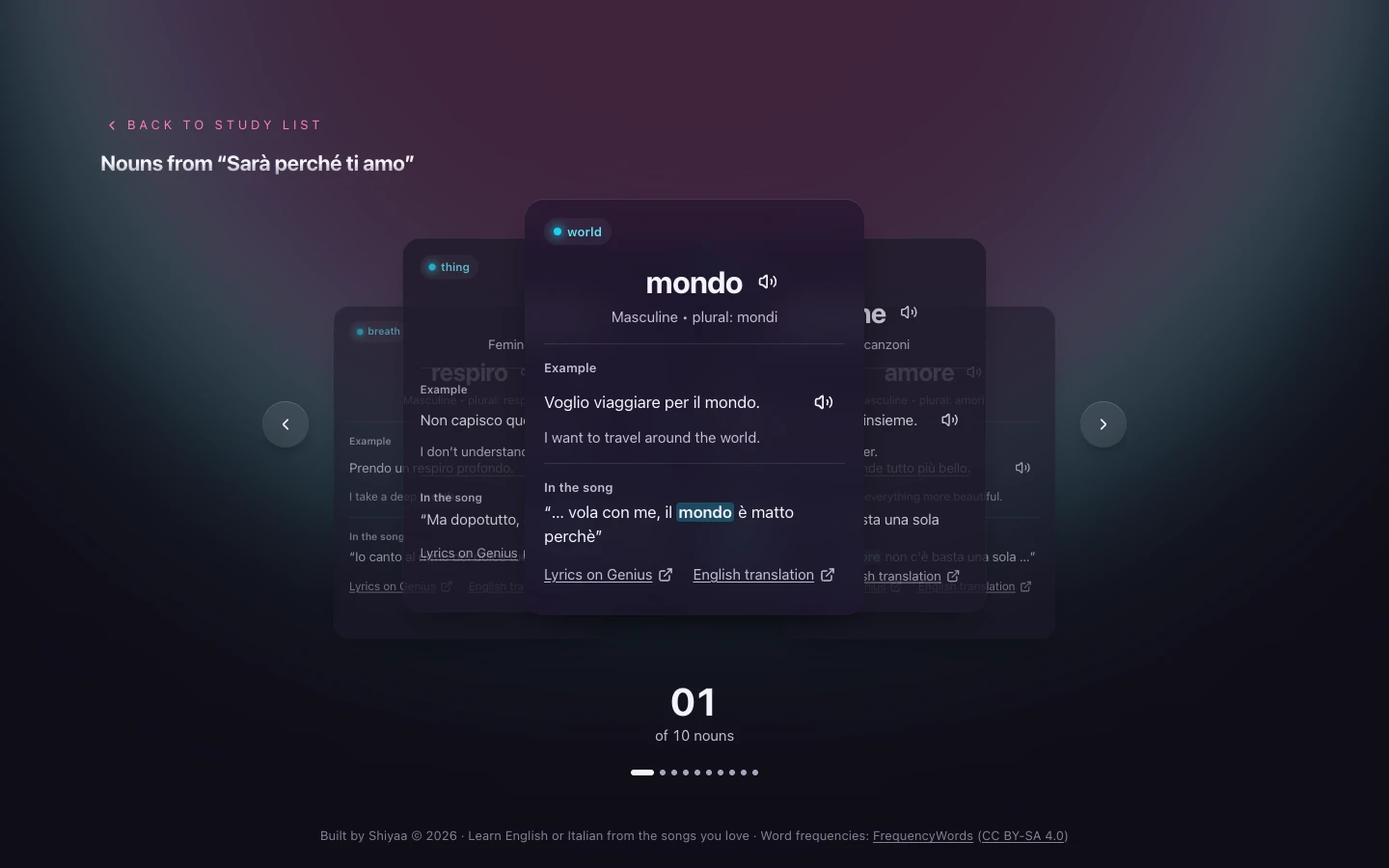
02
Each card brings together meaning, grammar, an everyday example, and a short excerpt from the song.
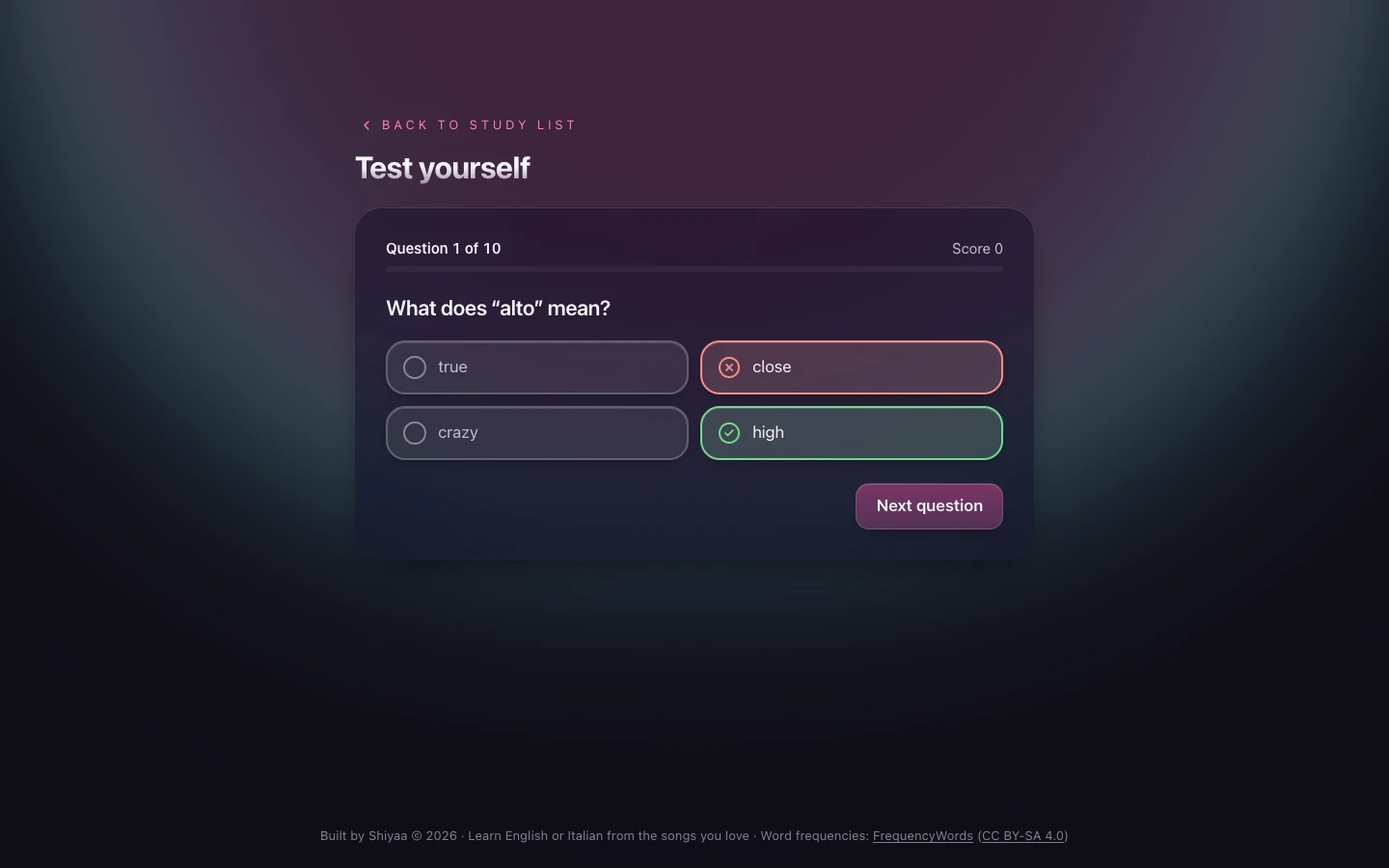
03
One question at a time, with feedback after each answer and a visible place in the quiz.
Actual product screenshots. Open any image for the full-size view.
03 / The redesign
The first interface already had search, study cards, and a quiz. When friends tried it, they did not immediately understand what the app was for, and the study cards felt like a wall of text to scroll through. That gave me two priorities: explain the purpose earlier and make the learning material easier to approach.
Early feedback / paraphrased from my friends
Informal feedback, recalled by me; not a recorded usability study.
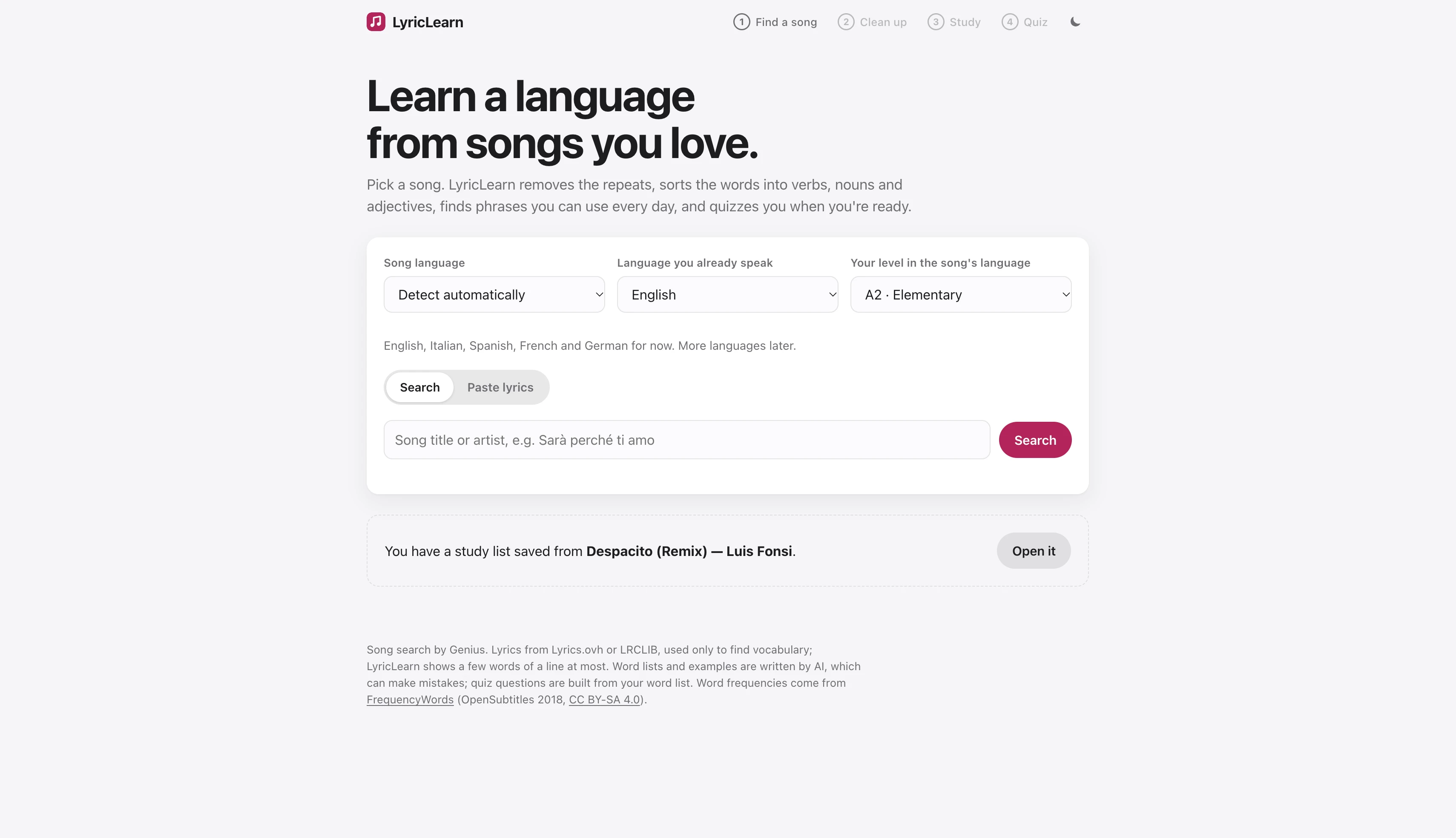
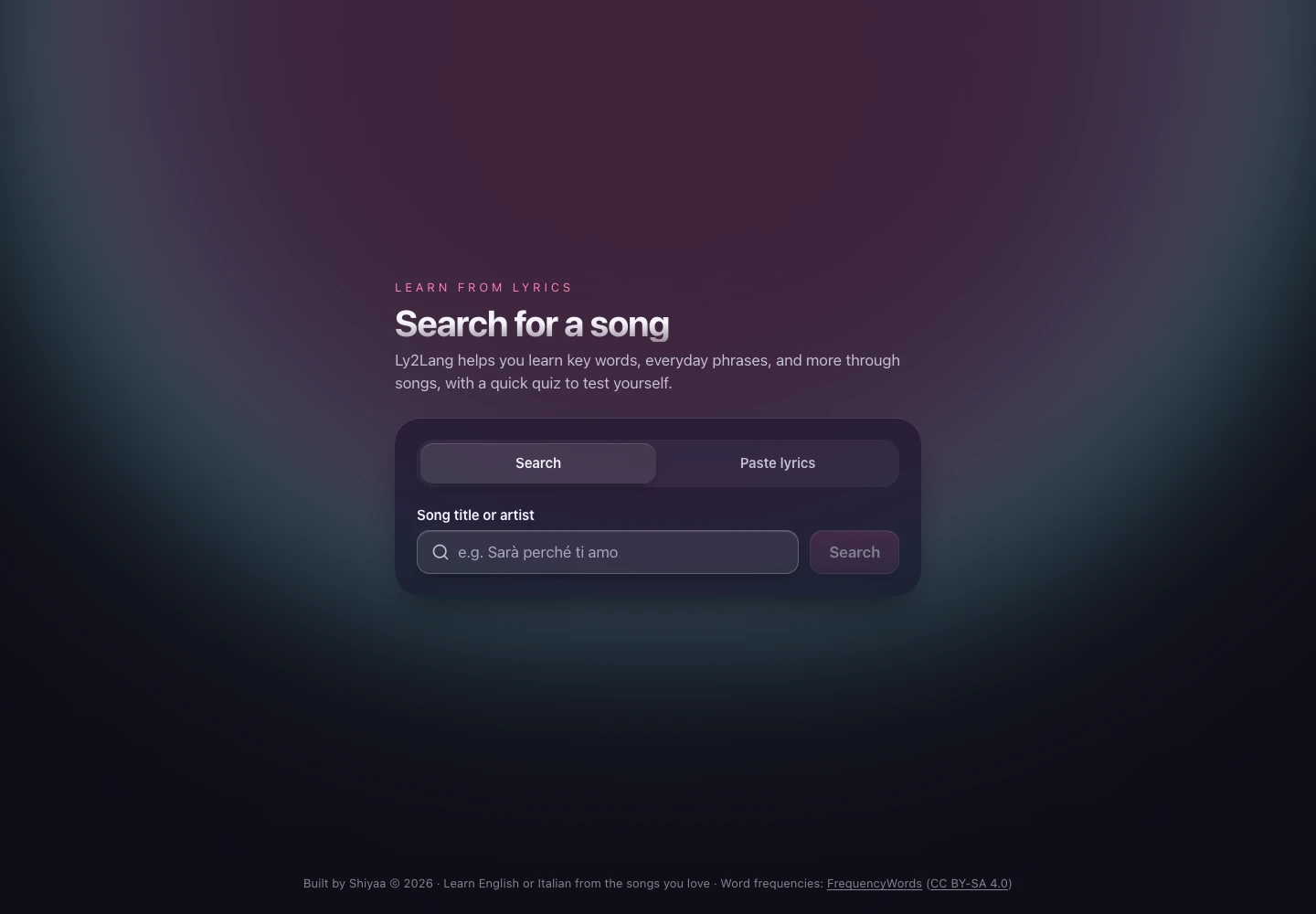
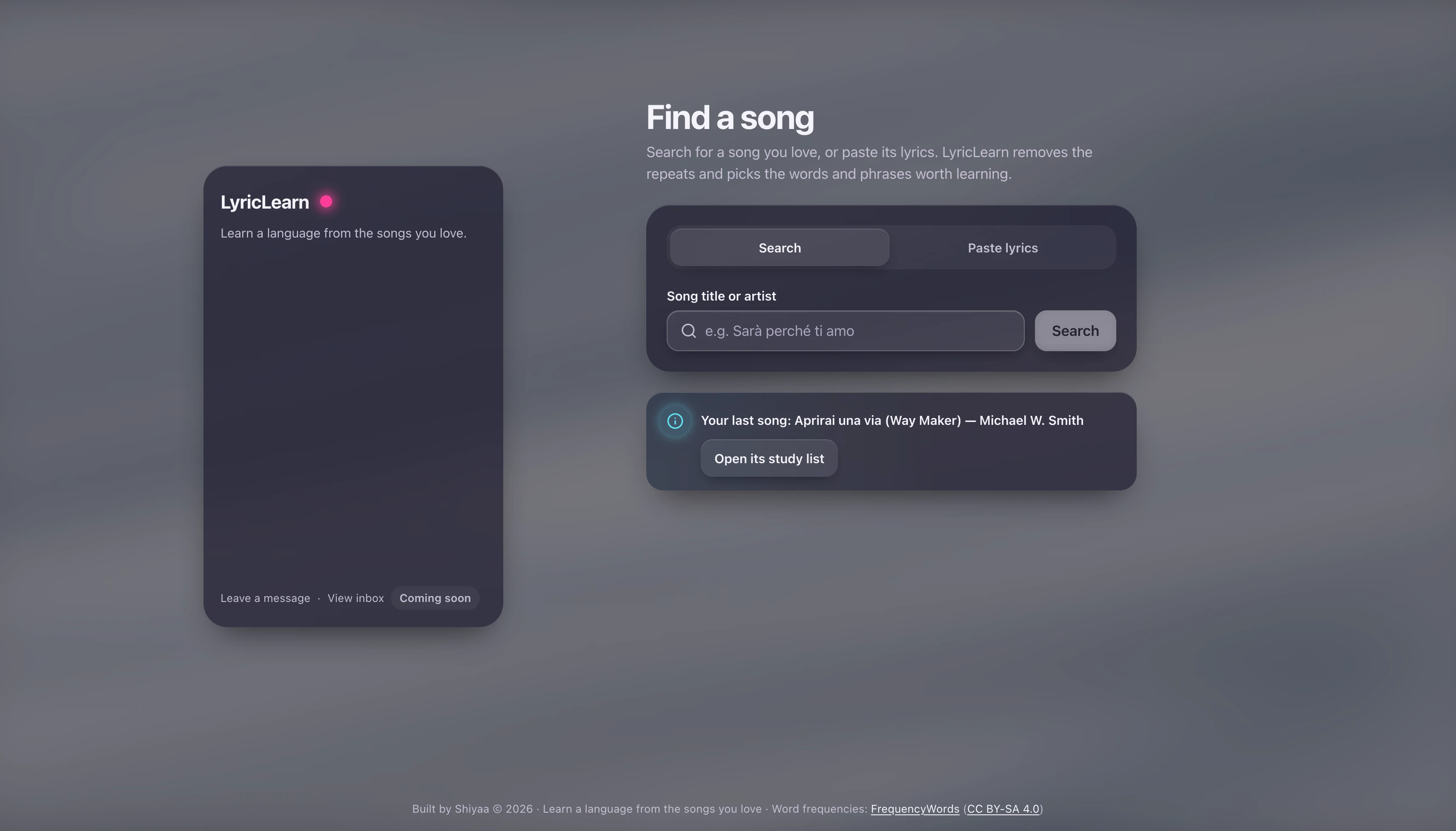
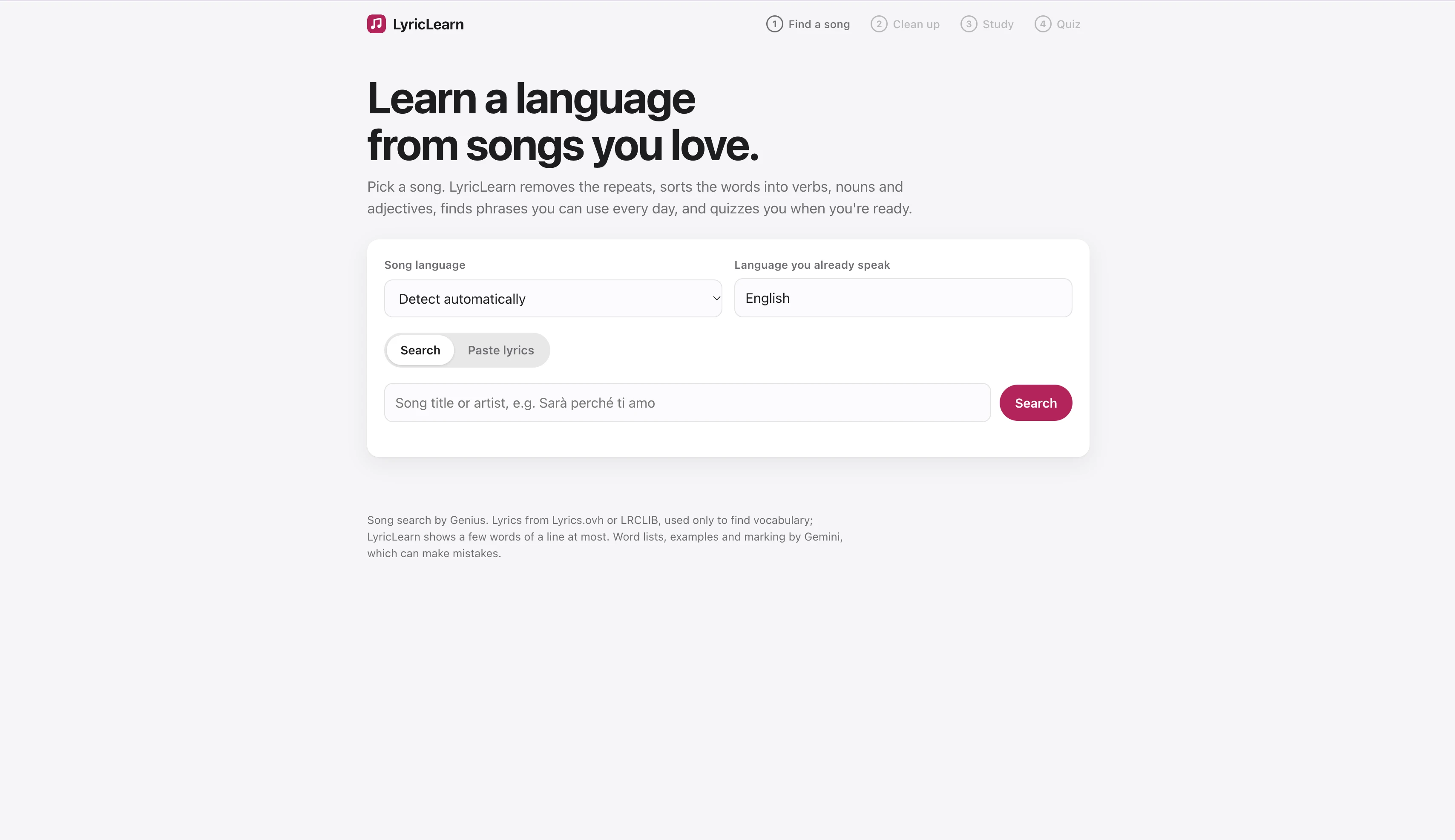
Search interfaces · Early version: 18 October 2026. Current capture: live /app page. Select an image to view it full size.
Fewer setup choices also mean less personalisation: the current lesson requests use an A2 default.
The glass direction was an intermediate step. The 20 October screen still had a large sidebar and a prominent saved-song panel. Later iterations removed the sidebar and made returning to a song a quieter action.
04 / Directing AI
I used Claude Code to help implement the product, while choosing the experience, reviewing screens, and refining the details. The design log records guidance from the apple-design and frontend-design skills, followed by a shared system of typography, glass surfaces, spacing, and component states.
Specify what a folder does on hover, keyboard focus, loading, failure, and opening—not just what it looks like.
Use shared tokens and components so buttons, inputs, cards, and feedback follow the same visual rules.
Check actual screens at small widths, including long text, touch targets, and reduced-motion behaviour.
“simple text … it shouldn't be like another button”
An instruction recorded in the design log for the “Learn from a new song” action. I reduced its visual emphasis so it did not compete with the quiz.
This is one documented direction-and-revision example. The screenshots show the iterations; they do not isolate the effect of a particular prompt or skill.
05 / Testing & iteration
AI helps select and explain language. Code handles repeated text, supplies frequency ranks when available, checks parts of the output, and builds the quiz from the resulting study list. These checks catch specific failures; linguistic accuracy still needs review.
The repository includes a regression test for rejecting absent phrases and correcting the line number.
api/phrases.js · test/routes.test.js
A regression test covers the duplicated forms and incorrectly mixed forms from another adjective.
lib/grammar.js · test/routes.test.js
The search implementation and its tests explicitly cover excluding these results.
api/search.js · test/search.test.js
06 / What’s next
Ly2Lang now brings song discovery, study cards, phrases, and a quiz into one experience for English and Italian. Friends have tried it, and their early feedback helped identify clarity and information-density problems. I have not yet measured learning gains or compared task completion across the versions.
Building solo with AI meant taking responsibility for what to keep, what to question, and what to refine. The digital-notebook direction became useful when it shaped the organisation and interactions, as well as the visual style.